Showing posts with label agri productivity. Show all posts

Saturday, 26 January 2013

Tinicum's Community Supported Agriculture continues a tradition of fresh, local produce in Upper Bucks County

By Donna Henschel
Tinicum Community Supported Agriculture (CSA) has launched its first season as a community supported agriculture venture on the preserved farmland of the Schneiderwind Farm & Nursery in Upper Black Eddy, Pa.

It will offer fresh, naturally-grown fruits and vegetables to its subscribing members -- carrying on the tradition established over the last three years at the same location by Open Acres CSA.

Upper Black Eddy, Pa. - Tinicum CSA announced recently that community supported agriculture (CSA) will continue in 2013 at the Schneiderwind Farm & Nursery in Upper Black Eddy.

Gaining in popularity nationwide, CSA farms offer community members a chance to buy fresh, local, seasonal produce directly from their farmer by purchasing a “share” in the farm. Farm members then visit the farm each week from late May to early November to pick up their share of that week’s harvest.

The members share with their farmers in both the risks (such as an unusually difficult growing season) and the many rewards of sustainable agriculture, which include an abundance of delicious, locally grown, healthful vegetables and fruits, aromatic herbs, and beautiful cut-your-own flowers – all grown without synthetic chemicals or pesticides.

Tinicum CSA is a partnership between Bucks County native John Crooke and Minnesota native Stefan Streit. They met last year while both were apprentices at Sisters Hill Farm, a CSA in Stanfordville, NY. Near the end of the 2012 growing season, Crooke and Streit made contact with Nate Walker, another former apprentice of Sisters Hill Farm.

At the time, Walker and his partner, Heather Brady, were managing Open Acres CSA at the Schneiderwind Farm & Nursery in Upper Black Eddy, but they had decided to relocate to New York City at the end of the 2012 season.

Walker introduced would-be CSA farmers Crooke and Streit to his landlord, Craig Schneiderwind. All five of them saw a beautiful opportunity in this convergence, and over the past several months, they have been working closely together to ensure a successful transition from Open Acres to Tinicum CSA.

“We can tell that Nate and Heather had a great time working with Craig and flourished in the midst of a dynamic community of folks who care about tasty veggies and sustainable food options,” said Stefan Streit, Tinicum CSA co-manager. “I’m excited to step into a CSA that already has all the infrastructure set up around a model that we know, and I can’t wait to meet some of the people who showed Nate and Heather so much support.”

What Tinicum CSA members can look forward to:
Community members may sign up for either a full share or a half share. Full share members visit the farm every week for 24 weeks to pick up their share of the harvest. Half share members pick up the same amount of produce per visit, but they pick up every other week. A typical share includes between 4 and 14 pounds of produce, featuring a seasonal assortment of more than 35 different crops. Crops include arugula, basil, broccoli, green beans, cabbage, cantaloupe, carrots, flowers, lettuce, onions, peppers, potatoes, winter squash, watermelons and many more.
Original Article Here

Thursday, 24 January 2013

Commentary: In agriculture, labels matter—until they don’t

Editor's note: The following commentary was written by Gene Hall, Public Relations Director for the Texas Farm Bureau and published on the Texas Agriculture Talks website.

In my more cynical moments, I suspect that the great confusion and controversy surrounding agriculture today is on purpose.

In this mindset, I can easily conclude that those organizations that survive by demonizing modern agriculture manipulate the language and the labels to suit their own purposes. In this way, passions are inflamed. Money is raised. A public is misled. Calling you “Big Ag” could mean “Big Bucks” for me even though all I’ve contributed to the debate are a couple of politically charged words.

I concluded awhile back that, in a way, farmers and ranchers have aided and abetted this nonsense. Forty years ago, the people who worked the land were concerned about their image. In Farm Bureau meetings, you’d hear things like, “They think we are unsophisticated hayseeds.” For people making business decisions every day, managing risks that would scare a Fortune 500 CEO and dealing with the hard reality of science and profit, this was not acceptable.

We began to talk about agricultural “operations,” agricultural “producers” and even (gasp!) the agriculture “industry.” It’s hard to know for sure, but perhaps the almost completely meaningless political chattering about “industrial agriculture” began in this way. Activists hint at dark and sinister things when they use these descriptions. Usually, it just means big. But then, the market for the product is pretty darn big.

I think “agricultural producers” understand now that the best way to refer to themselves is the simple and most accurate way. That would be, farmers and ranchers. They do what they do on “farms and ranches.”

There are those who would try to shoehorn their own beliefs into models they don’t understand and labels that don’t accurately describe anything. “Family farms and farmers have to be small and do things the way I want them done.”

Farmers and ranchers can accept the labels others affix to them, or they can tell their own story. Family farms account for more than 95 percent of all farms in the U.S. Some are very small and others are quite large. Together they produce an abundance of food that is the healthiest and safest this often hungry old planet has ever known. That’s the label I like best.
Original Article HEre

Saturday, 19 January 2013

Agriculture survey aims to optimize farming in Myrtle Beach area

By Steve Jones - sjones@thesunnews.com

MYRTLE BEACH -- Farmers have to be savvy businesspeople to turn their land into income year after year, and those in Horry County could get some help doing so in the not too distant future.

The Myrtle Beach Regional Economic Development Corp. has hired Clemson’s Horry County Extension Service to do an agribusiness survey aimed at finding ways to add value to the county’s agricultural products and hopefully money to farmers’ pockets.

Doug Wendel, chairman of the EDC’s executive committee, said the information from the study should allow businesspeople to team up with farmers to develop strategic plans to add clout to Horry’s agriculture.


The same movement is happening across the state, as evidenced by the annual S.C. Agribiz and Farm Expo, held last week in Florence.

An example of how farms and business can team up to favor both might be the opening of a peanut buying station in Horry County that coincided with peanuts overtaking tobacco as the county’s largest cash crop.

Peanuts yielded $5.1 million for Horry farmers in 2010, according to the National Agricultural Statistics Service of the U.S. Department of Agriculture, and more than $15 million in 2011, the latest year for which figures are available.

The buying station may have played a part, but the real cause of the meteoric rise was an increase in the price paid for the crop, said Jack Shuler, president of the privately-funded Palmetto Agribusiness Council. The same thing happened across South Carolina, he said. Shuler predicted a drop in peanut production this year that reflects a lower price.

The relation between price and production shows the complex map a business-farm team will have to navigate to develop long-term plans for more dollars from Horry’s agriculture.

“You’ve got to have some pretty solid data,” said Blake Lanford, the Horry extension agent who will oversee the survey. “We’re talking huge investments (to increase the agricultural yield).”

Lanford said the investments will have to be based on where the market is going, and a prevailing sense is that there is a growing demand for local food from residents, chefs and grocery stores. If that is seen to have a solid and growing future, Lanford suggested that investors might put their money into storage and delivery businesses to facilitate a crop’s journey from field to table.

The idea reflects a state plan to set up food hubs that would gather crops from a 150-mile radius and be a place where buyers could be sure they would find what they needed. The hubs, Shuler said, could also serve as a statistical gathering place to tell farmers the demand for each crop and allow them to plan at least part of their planting to serve it.

Shuler said Horry likely would never be the site for one of the state-sponsored food hubs because a 150-mile radius from anywhere in its boundaries would take in part of North Carolina and the Atlantic Ocean, not the optimum situation for all farmers.

He agreed that the farm to table movement opens up some opportunities for farmers and said schools might provide another limited market because only a small part of the school year would coincide with the harvest of most produce they might use.

Shuler said the entire state doesn’t grow enough of any one product except maybe peanuts to justify a production facility to convert crops to things such as canned corn or flour. “What we’ve got to look at is how do we capture some niches,” he said.

He suggested that the state’s farmers could use their location in the middle of the East Coast to establish customers from Boston to Miami, and to look at farmland as productive for things other than crops. Livestock is one example, the breeding of racehorses another.

He further thought that Horry farmers could take advantage of the Grand Strand’s 14 million visitors each year through agritourism.

“We have a lot of people who are interested in spending the day on the farm or spending the night on the farm,” Shuler said.

A wild idea, he said, would be to convert out-of-business golf courses into irrigated crop fields.

Lanford said the survey will be about more than just crops and look at how farmland can be used for everything to raising stock for biofuels to timber.

But the only information officials have now is anecdotal and solid data is needed so the business-farm team can do its work.

Lanford said that gathering data for the survey could take six months and two to three months afterwards will be needed to develop strategic plans.

The EDC matched a $25,000 grant from the Northeastern Strategic Alliance to pay for the survey.

People watching urban areas take up more and more farmland might assume that agriculture is on the decline. Indeed, the USDA statistics say that more than 30,000 fewer acres were planted in Horry County in 2011 than in 1992. But technology allows farmers to produce more on less land than they could in 1992, and Horry still has 165,000 acres plowed and planted.

Others might assume that there’s less and less net income for small farms. But Shuler cautioned not to underestimate the collective power of the smaller operations.

“We don’t want to forget the fact,” he said, “that small farms are big business.”

And a key goal of the survey will be to make them bigger business.
Original Article Here

Nigeria: Mobile Phones Have Reduced Corruption in Agriculture - Minister

The Minister of Agriculture and Rural Development, Dr. Akinwumi Adesina today disclosed that mobile telephones have been used to effectively tackle corruption in the agricultural sector of the country.

According to a release signed by Director of Information in the ministry, Salisu Na'inna Danbatta, the minister said while receiving the Administrator of the United States Agency for International Development (USAID) Mr. Rajiv Shah during a courtesy call in Abuja on Thursday that, "deploying the mobile phone to deliver agro-inputs to farmers through the e-Wallet has ended 40 years of corruption in the procurement and distribution of fertilisers by the Federal Government."

"Dr. Adesina explained further that the mobile phone has boosted the productivity of small-holder farmers in the country by delivering improved seeds and much-needed fertilisers to them and contributed in the economic revival of rural areas," the statement further said.

Other claims contained in the release were that "..The e-Wallet is working and the mobile phone is the most powerful tool in fighting corruption in the agricultural sector" ...and that "...due to the implementation of the Growth Enhancement Support scheme through which 1.2 million small-holder farmers accessed government-subsidised fertilisers and free improved seeds, an estimated 8.1 million metric tonnes of food was added to the national harvest in 2012."

5 million farmers will be registered to benefit from the GES scheme in 2013 as part of the Federal Government's effort to add 5 million metric tons of food every year, the minister told his guests.

Proof that the Agricultural Transformation Agenda (ATA) was working could be seen in the US$8 billion foreign investments which flowed into the sector in 2012 alone, Dr. Akinwumi said.

"In his remarks, Mr. Rajiv Khan commended the Minister for his dynamic leadership and attributed the success so far achieved in transforming the sector to his commitment," the statement added.
Original Article Here

Federal agriculture minister says Ottawa is intent on growing the wheat industry

EDMONTON - Stripping the Canadian Wheat Board of its monopoly on wheat and barley sales is only the start of the federal government’s “modernization” of the industry, federal Agriculture Minister Gerry Ritz said Friday.

In addition to the establishment of marketing freedom, Ottawa plans to cut farmers’ costs, invest in innovation and develop new markets, Ritz said at the Western Canadian Wheat Growers Association convention in Edmonton.

Wheat in Western Canada brings in nearly $4 billion to the farm gate and represents $5.6 billion in exports, but Ritz said the crop is in decline despite the growth of the middle classes in markets such as China and India.

“We’ve seen slippage in our production capacity of wheat over the last two decades — less and less wheat being grown, less markets demanding hard red (wheat variety) predominantly,” Ritz told reporters.

Scientists are mapping the genome of wheat and that could lead to stronger and gluten-free varieties, he said.

Ritz said the government also wants to make it easier for farmers to get their wheat to market by introducing the Fair Rail Freight Service Act, which would give shippers the right to enter into a commercial service agreement with the railways.

“The average shipment in Western Canada is 1,400 kilometres to get it to port and that takes rail in most instances to do it. There were a lot of instances where the railways would step up to the challenge and do a great job … and there were other instances where it slips a little bit.”

Amendments introduced to the Canada Grain Act as part of the budget eliminate mandatory inward weighing and inspection of grain done between elevator and port by the Canadian Grain Commission. Ritz said that will cut $20 million out of the farmers’ cost of shipping grain yearly.

“With farmers no longer owning the wheat to port as was done under the Canadian Wheat Board, there was no need for that anymore.”

Ritz also revelled in Thursday’s decision by the Supreme Court of Canada that it will not hear an appeal by eight former Wheat Board directors who argued the government should have held a plebiscite among grain producers before making radical changes.

Ritz said stripping the board’s monopoly “has gone well” for farmers. “At the end of the day, they were able to capitalize on some pretty good prices in the marketplace and deliver in a timely way. A farm’s like any other business; it relies on cash flow.”

Farmers attending the convention applauded Ritz for removing the board’s monopoly on western wheat and barley sales.

“The transition from the single desk to the open market has worked so extremely well and it’s been so seamless,” said Rolf Penner, a wheat farmer from Morris, Man. “We all expected some kind of hiccup somewhere and really there hasn’t been any.”

But Wheat Board supporters such as the National Farmers Union vowed to continue their fight.

“This is a dark day for western Canadian farmers and the marketing agency that worked solely on their behalf,” said president Terry Boehm, in a statement released Friday.

“Farmers will continue to pursue this matter in the courts, through our class action suit against the Harper government.”

Original Article Here

Thursday, 27 December 2012

From the Ground Up - Christmas & Agriculture

Our traditional Christmas celebrations wouldn’t be possible without production agriculture.

You’ll find agriculture’s finger prints on the wonderful food we enjoy as well as many of the gifts we give and receive.

“ Well, as we continue to enjoy the holiday season I think an important message to remember from those of us who are in agriculture is the role that food and fiber production plays in this country, and during the Christmas season it’s easy to look at the Christmas Trees, many of them come from ag production Christmas farms, to the turkeys that are raised, or the candied yams we enjoy eating.”

Doug Steele is the director of the Texas A&M Agrilife Extension.

“You know one of the concerns I have in agriculture and in production agriculture is that people no longer have the firsthand knowledge of where that bountiful table spread comes from, and they enjoy the harvest and production of a lot of people in our country that provide for the many that maybe assume it comes off the grocery shelf or maybe assume that it’s already prepackaged when it gets to them, and there’s not a true understanding of the toils of the farmer and rancher that brings a product to table.”

Steele says that the Christmas holidays hold a very special place in the hearts of agricultural producers.

“In the same sense that the Christmas spirit and the holiday spirit brings people together and families together, I think it provides an opportunity for the ag community to come together to reflect on the past year of successes and failures, of the fears and the joys, the tears and the laughter, and gives us a chance to come together as a community of people who invested our lives in feeding and clothing this country to remember some of the good things that take place during this time of year.”

I’m Kailey Carey, tracing the journey our food and fiber makes from the farm and ranch to our homes, From The Ground Up.
Original Article Here

Monday, 19 November 2012

Sustainable agriculture tops business chamber’s agenda


ZAMBOANGA CITY -- Business leaders and agriculture experts in Zamboanga Peninsula are converging here next month to promote an environmentally sound technology that will not only shore up the region’s farm output but also ensure sustainable development and food security.
Ricardo A. Marmoleno who heads the committee of the agriculture and food security of the city’s business chamber said the objective of the conference, dubbed as "Private Public Partnership for Agri-Business Prosperity in the Region," is to let farmers and agri-based traders know the newest agriculture technologies that are available in the market to help increase productivity and protect the environment.

"The concern in agriculture is not just to improve the bottom line for companies, but there is also the responsibility to contribute to improving the lives of the majority of Filipinos engaged in agriculture, whether for commercial purposes or simply to feed their families," Mr. Marmoleno said.

"Thus, we must also consider the impact on the environment of energy and fertilizer use, the issue of water conservation and sharing, pricing along the supply chain so that exploitation of the farmer producer is minimized," he added.

The Zamboanga Chamber of Commerce and Industry Foundation, Inc. said there is a need to boost the agriculture sector in the region since the local economy is heavily dependent on it.

At the same time, Mr. Marmoleno said the majority of the country’s labor force is employed in agriculture and agro-related activities considered the economic backbone of the country.

"[But] despite these, agriculture has always taken a backseat to non-agricultural industries," he said.

"Economic policies and planning have not focused enough on improving and enhancing the capabilities of those engaged in agricultural production, especially the small- and medium-scale farmers," he noted.

The conference, scheduled on Dec. 6 in this city, is also a parallel effort on how to translate those high level agreements in the United Nations such as the Rio+20 into doable actions on the ground, as it tries to address the effects of climate change, the scarcity of resources, how to encourage industry to adopt the concept of green technology, and saving the vulnerable sector in the face of global challenges.

"The United Nations has warned of a looming food crises which will greatly and adversely affect the world, particularly the poor. At present, small farmers in the Philippines can hardly produce enough food for themselves, let alone the teeming millions in our cities," Mr. Marmoleno said.

"One challenge in agriculture is to raise productivity by planting more plant varieties. Varieties that have higher yield and better quality of the crop," he further said.

Mr. Marmoleno cited the sardines industry in this city as a prime example on how a resource sector has failed to maximize its advantage.

"We can consider what role we can play in each of these areas, Zamboanga City supplies 85% of the canned sardines produced in the country, such that the city is referred to as the ‘Sardines Capital of the Philippines,’ but here there is no one engaged in the commercial production of tomatoes to supply the sardine canning factories," he said.

At present, most if not all sardines canneries here source their tomato paste from China due to its product consistency.

"We can push for increased agricultural productivity, helping the farmers link with groups that can enhance access to information the farmers need for entering local and national markets for their products, processing activities for added value of their crops and other ways of increasing the return on the farmers’ manpower inputs," Mr. Marmoleno said.

The Zamboanga Chamber of Commerce and Industry Foundation is Western Mindanao’s biggest business chamber. It traces its roots to the early 1970s.

But the chamber was registered as a foundation only in 1988, befofe it became affiliated to the Philippine Chamber of Commerce and Industry (PCCI) as a non-profit and non-stock corporation.

From its roots as a fraternal organization, the chamber has long since moved beyond that to become a respected voice of businesses and industries,and a dynamic advocate of a growth-friendly regional business environment for Western Mindanao.

The chamber said it is a recognized partner of government for sector development. --Darwin T. Wee
Original Article Here

Monday, 5 November 2012

Agriculture industry stakeholders ink framework for post-patent seeds

Thomas Saidak

In Iowa, The American Seed Trade Association and the Biotechnology Industry Organization recently completed the first phase of an industry Accord to establish a framework for post-patent single trait seeds.

Chuck Larson, executive director of Americans for Choice and Competition in Agriculture said:

“After five years of tireless negotiations among ASTA, BIO and industry stakeholders, progress on the maintenance of traits after patent expiration is a significant first step to ensure American farmers are equipped with continued access to the technologies necessary to feed the world’s growing population through increased production and better nutrition in the grain trade. For the GEMMA to be effective, all trait providers must agree to it, and AgChoice encourages these industry-leading companies to sign the GEMMA and include all biotech traits as part of the Accord.

“Although this is a significant milestone for the industry, there is still much work to be done. Innovation in this market is focused on the multi-trait, or stacked, seed marketplace. Therefore, the Accord will remain incomplete until a full set of legal and regulatory systems are in place to promote choice, competition and innovation for farmers. Key to the next phase of the process is recognizing the importance of international grain trade and the maintenance of regulatory data. Establishing a robust framework for bringing post-patent multi-trait seeds into the agricultural marketplace will unleash a wave of innovation that will increase agricultural output and – ultimately – the U.S. Economy.”


Original Article Here

Tuesday, 23 October 2012

Malaysia conference pinpoints need to address gender gap in agriculture


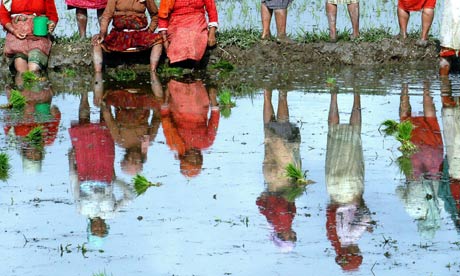
Women take a break from working on a paddy field on Kathmandu's outskirts. An FAO report says gender equality creates better yields. Photograph: Narendra Shrestha/EPA


Productivity losses due to the agriculture "gender gap" are straining global economies, a conference has heard. This was the consensus of gender scientists and agricultural researchers at a workshop in Malaysia that aimed to develop an agenda for gender transformative research for the agricultural sector.


The conference, held in Penang this month, was convened by the CGIAR Consortium. According to Paula Kantor, a senior gender scientist at the Malaysia-based WorldFish Centre, gender disparities persist in "access to resources, markets and technologies, even after decades of research and interventions on gender".


"Women play a significant role in development," Kantor said. "[But] their abilities to contribute to rural development and family wellbeing are limited by inequalities in choices of occupations, wages and incentives; responsibility for care work; and access to, and control over, productive resources."


A report from the Food and Agriculture Organisation (FAO) has revealed that farm yields increase by up to 30% if women are given the same access to productive resources, markets and technologies as men. "This could raise total agricultural output in developing countries by 2.5-4%, which could in turn reduce the number of hungry people in the world by 12-17%," said Kantor.


Gareth Johnstone, Cambodia country manager for CGIAR's research programme on aquatic agricultural systems, emphasised that most development policies were addressed with only men in mind. Johnstone said creating situations in which both men and women are engaged in decision-making is one very "basic method" of applying the gender transformative approach to policy. "Such basic actions will promote female empowerment and increase mutual respect between men and women," he said.


Johnstone believes this will not only lead to improvements in farm yields, but will also bring positive benefits for family and community welfare, nutrition and child wellbeing. "Seeing real people making changes inspires others to believe it is OK to do the same," said Kantor.


Johnstone suggested that educating the public would require detailed documentation and the rigorous study of local and regional societal norms. "Unlike structured organisations, such a change would require a bottom-up approach rather than a top-down approach … [based on] ineffective, insufficiently studied governmental intervention and policies," he said. "There must be a vision shared with people on the importance of gender balance in society, and [the development of] a basic understanding of female empowerment."
Original Article Here

Friday, 12 October 2012

Agriculture to replace mining – Chenda

From JERRY MUNTHALI in Tokyo, Japan
MINISTER of Agriculture and Livestock Emmanuel Chenda says Government is stepping up efforts to have the agriculture sector replace mining as the main vehicle of economic growth.
Mr Chenda made the pronouncement when he addressed a breakfast meeting hosted by the Japanese-African Union Parliamentary Friendship League at the prestigious Hotel New Otani in Tokyo yesterday.
“Right now, we have been concentrating on maize production but we want to diversify into livestock farming and aquaculture. We are looking to attract investment into Zambia to help us to develop these two sectors,” Mr Chenda said.
He added: “Our country is blessed with a lot of land and we are only using 14 percent of the land on agriculture, which means that there is a lot of potential that is yet to be tapped. From the 75 million hectares of land we have, 58 percent of arable land is available for agriculture purposes.”
He also said Government appreciates the gesture by the Japanese government to set up a veterinary school at the University Of Zambia (UNZA).
“Since the setting up of the school, we have trained many doctors and this has not only resulted in the development of the livestock sector but also an increase in production,” Mr Chenda said.
And Minister of Tourism and Arts Sylvia Masebo said Government is on a diversification programme and has put tourism on top of its agenda, to develop the sector and create employment among the youths.
“We have high unemployment among the youths and our government is working hard to improve the tourism sector to create employment for the youth,”she said.
Ms Masebo said Government in the past concentrated on wildlife tourism but has now started exploiting culture and arts.
She also invited Japanese parliamentarians to the United Nations World Tourism Organisation (UNWTO) General Assembly to be co-hosted by Zambia and Zimbabwe next year.
And Mr Yasutoshi Nishimura, who is a member of the House of Representatives and delegation leader, said his country values the relations between Zambia and Japan.
Original Article Here

Monday, 24 September 2012

Radical changes to transform NKorean agriculture

SARIWON: North Korean farmers who have long been required to turn most of their crops over to the state may now be allowed to keep their surplus food to sell or barter in what could be the most significant economic change enacted by young leader Kim Jong Un since he came to power nine months ago.

The proposed directive appears aimed at boosting productivity at collective farms that have struggled for decades to provide for the country's 24 million people. By giving farmers such an incentive to grow more food, North Korea could be starting down the same path as China when it first began experimenting with a market-based economy.

Two workers at a farm south of Pyongyang told The Associated Press about the new rules on Sunday, saying they were informed of the proposed changes during meetings last month and that they should take effect with this year's upcoming fall harvest. The Ministry of Agriculture has not announced the changes, some of which have been widely rumored abroad but never previously made public outside North Korea's farms.

Farmers currently must turn everything over to the state beyond what they are allowed to keep for their families. Under the new rules, they would be able to keep any surplus after they have fulfilled state-mandated quotas — improving morale and giving farmers more of a chance to manage their plots and use the crops as a commodity.

"We expect a good harvest this year," said O Yong Ae, who works at Migok Cooperative Farm, one of the largest and most productive farms in South Hwanghae Province in southwestern North Korea. "I'm happy because we can keep the crops we worked so hard to grow."

The outside world has been watching closely to see how Kim's rule will differ from that of his autocratic father, Kim Jong Il, who died in December, and how he will deal with the country's chronic food shortages.

The proposed changes mimic central elements of China's rural reform in the late 1970s and early 1980s, when China allowed farmers to hold onto their surplus after meeting state quotas, John Delury, an assistant professor at Yonsei University in South Korea who specializes in Chinese and North Korean affairs, said Monday.

The result for China: a significant boost both for the economy and then-leader Deng Xiaoping's popularity.

"Of course, a major difference between the two cases is that the vast majority of the Chinese population were farmers at the time," he said. North Korea has fewer farmers and less arable land, and "will have to find its own formula for successful development."

Kim Jong Un, who inherited a nation with chronic food, fuel and power shortages, has made improving the economy a hallmark of his nascent rule. In his first public speech in April, he openly acknowledged economic hardship in North Korea, and pledged to raise the standard of living.

The young leader, who is the third generation of his family to lead North Korea since his grandfather founded the communist state in 1948, has already has made some significant changes. He dismissed his father's army chief and promoted a younger general. He has also been presenting a much more accessible public persona, appearing among the masses with his wife and giving televised speeches, something his father shunned during his time in power.

However, North Korea has maintained its confrontational stance toward much of the outside world, especially wartime enemies South Korea and the United States. Pyongyang continues to build and develop its nuclear program despite outside pressure to dismantle its atomic facilities in exchange for much-needed aid and international cooperation.

North Korea has a per capita GDP of $1,800 per year, according to the U.S. State Department, far below that of its neighbors in Northeast Asia, and its rocky, mountainous terrain and history of natural disasters has long challenged the Kim regime to provide enough food.

Founder Kim Il Sung created the country's farming system in 1946 by turning farms that had been private during colonial Japanese rule into collective operations.

At cooperative farms across the country, the government doles out fuel, seeds and fertilizer, and farmers pay the government back for the supplies, said Kang Su Ik, a professor at Wonsan Agricultural University.

The farmers' crops go into the Public Distribution System, which aims to provide North Koreans with 600 to 700 grams of rice or cornmeal a day. However, a persistent shortfall of more than 400,000 tons a year in staple grains has meant lower rations all around, according to the United Nations, which has appealed for donations to help North Korea make up for the shortage.

Under the previous system, each farmer could keep as much as 360 kilos of corn or rice a year to consume or sell at the market, in addition to what they grow in their own courtyards. The rest was turned over to the state to distribute as rations, Kang said.

The proposed changes would reverse the equation, challenging farmers to meet a state quota and then allowing them to do as they wish with the rest, including saving it for themselves, selling it at the local farmer's market or bartering it for other goods.

Farmers also would have more control over tending their plots. At Migok, 1,780 farmers work in teams of about 100. In the future, sub-teams of about 20 to 30 farmers are expected to have more say in how to tend their crops, said Kim Yong Ae, who oversees the visitor's center at Migok, where a patchwork of rice paddies stretches as far as the eye can see.

The new rules could be "a very important and constructive step," if they amount to real change, Marcus Noland of the Washington, D.C.-based Peterson Institute for International Economics, said via e-mail.

O, who lives with her rice farmer husband and two young sons in Migok's Apricot Village, brightened up when she said the family expects a surplus this year. Migok was unaffected by the summer rains that destroyed farmland elsewhere in the country, and their private garden is bursting with fruit trees, vegetables and marigolds.

Still, she said they would probably donate their extra rice to the state anyway — an offering known in North Korea as "patriotic rice."

It's unclear whether the agricultural changes will be on the agenda when legislators convene Tuesday in Pyongyang for the Supreme People's Assembly. The gathering marks the parliament's second session of the year, a notable departure from the once-a-year meetings held during Kim Jong Il's rule.

The Presidium of the parliament did not announce an agenda, but Kim Song Chon, a Presidium official, told AP that legislators have been summoned to discuss domestic and foreign policy and to make personnel changes at top state bodies.

Thursday, 20 September 2012

African States Urged To Pursue Rapid Productivity Growth In Agriculture

LAGOS, NIGERIA, Sept 20 (BERNAMA-NNN-GNA) -- African countries have been urged to pursue rapid agricultural productivity growth, and institutional reforms which will make their agriculture sector viable, efficient and competitive.

Dr Akinwunmi Ayo Adesina, Nigeria's Minister of Agriculture and Rural Development, who made the call, says achieving agricultural productivity growth will also require a structural change in the labour composition of the sector which calls for encouraging young commercial farmers to meet the increasingly complex challenges of market and technology.

"Agriculture holds the greatest potential to create millions of jobs, we therefore need to create jobs for our many unemployed youth and then feed our rising population well into the future," he said in a speech read out at the opening of a two-day Regional Creating Shared Value (CSV) Forum here on Tuesday.

The minister said the sector should be seen as a business and not a development programme and there was also a need to focus on agricultural value chains instead of just increasing production.

Original Article Here 

Friday, 14 September 2012

New USDA Program Expands Production and Demand of Malawian Agriculture By Land O'Lakes, Inc.

By Land O'Lakes, Inc.
Land O'Lakes International Development has just launched a new U.S. Department of Agriculture-funded Food for Progress Program as well as a Buy Malawi public awareness campaign to boost domestic demand for locally grown and processed agricultural products. Representatives from Malawi's Ministry of Industry and Trade; the U.S. Embassy to Malawi; and Land O'Lakes International Development all spoke at the launch event in Blantyre.

The nearly four-year program will work to improve agricultural productivity in Nkhotakota and Salima districts by expanding irrigation opportunities and taking private-sector led approaches to revitalizing how rice, cassava and small livestock are farmed. Valued at $18 million in total, this Food for Progress program will train 51,000 farmers, particularly female farmers, on best production practices, improved farming technologies, and the importance of maintaining a diverse diet.

"More Malawian investments need to be locally owned, and more local entrepreneurs need to be at the helm of businesses that employ locals as they prepare for growth," said Nebert Nyiranga, Principal Secretary for Malawi's Ministry of Industry and Trade. He added, "This makes me very pleased to see that this new USDA-funded Food for Progress Program will place significant attention on growing and strengthening Malawian farmer groups, associations and cooperatives."

Building on Land O'Lakes' rich agribusiness cooperative heritage, over 200 farmer associations will be trained in International Development's AgPro methodology through the program. AgPro is a training tool that strengthens the efficacy, as well as the organizational and financial management, of farmer-owned producer groups and cooperatives. It was developed by Land O'Lakes under the United States Agency for International Development (USAID)-funded Cooperative Development Program. Strengthening farmer groups, associations and cooperatives will enhance commercialization capacities and market linkages, giving farmers greater negotiating power. The program will also engage financial service providers to increase access to insurance, credit and other financial services for smallholder farmers.

Also speaking at the event, the U.S. Embassy to Malawi's Economic and Commercial Growth Officer Chris Nyce stated how the Food for Progress Program is strongly supportive of key development initiatives by the Governments of the United States and Malawi. "In line with Her Excellency the President Mrs. Joyce Banda's Food Security Initiative and President Obama's Feed the Future Initiative, this Food for Progress program will rely on a value chain approach that not only focuses on farm productivity, but also facilitates partnerships with diverse stakeholders, including the private sector, to expand agro-processing and export opportunities," Nyce said.

As insufficient domestic demand for local products remains a key constraint to agricultural production, the event in Blantyre also launched a Buy Malawi campaign –a key element of the Food for Progress Program – in order to sensitize Malawian consumers about the importance of buying locally grown and processed products. Employing TV, radio and billboard ads, in-store events, as well as other social marketing tools and tactics, the initial Buy Malawi Campaign will be followed by three other campaigns that specifically target rice, cassava and small livestock value chains.

"To further spur consumer demand, I am pleased to see that Land O'Lakes, in partnership with a range of stakeholders from across Malawi, is launching this Buy Malawi campaign today, a public awareness effort that will ensure Malawians at-large recognize the importance their buying power plays in ensuring a brighter future for themselves and for their neighbors," Nyiranga said.

The Food for Progress and Buy Malawi launch event was attended by a wide range of public and private sector partners from across Malawi, the District Commissioner for Nkhotakota, the District Administrator for Salima, as well as an array of Malawian processors and business associations. Many Malawian small and medium-sized enterprises also displayed their products and services at the event, while a drama skit engaged audience members to better understand the positive impact they could have on economic development when they purchased local products.

Operating in Malawi since 1999, Land O'Lakes recently completed implementing the $5.7 million Malawi Dairy Development Alliance (MDDA), a program that helped reduce poverty and hunger for some 14,000 individuals by enabling farmers to form Milk Bulking Groups (MBGs), through which they could access credit, inputs and markets. The program made 1,600 cows available to farmers and provided thousands with training to improve animal care and feeding. By the end of the program, more than 4,000 people had adopted new farming technologies and management practices, including fodder conservation, to help get them through the dry season. Of the 23 MBGs, seven have now formally established themselves as cooperatives.

On August 5, U.S. Secretary of State Hillary Rodham Clinton announced a $46 million expansion of U.S. government investment in Malawi during a visit to the Lumbadzi Milk Bulking Group, one of 23 dairy producer groups assisted throughout the course of MDDA.

Land O'Lakes, Inc. (www.landolakesinc.com) is a national, farmer-owned food and agricultural cooperative with annual sales of nearly $13 billion. The nation's second-largest cooperative and number 210 on the Fortune 500, Land O'Lakes does business in all 50 states and more than 60 countries. Operating as a not-for-profit division of the cooperative, since 1981, Land O'Lakes International Development has improved the quality of life for millions of people in 76 nations through more than 275 projects worldwide that are generating economic growth, improving health and nutrition, and alleviate poverty by facilitating market-driven business solutions.

SOURCE Land O'Lakes, Inc.
Original Article Here

Monday, 10 September 2012

Agriculture the 'safest of bets' for Australia's future, says Year of the Farmer director Philip Bruem

THE time for Australian farmers to stamp their authority on the world stage is now, Australian Year of the Farmer director Philip Bruem says.

The dairy, cropping and sheep farmer from Forbes, NSW, has revealed key elements of a "battleplan" for the farming sector ahead of an address to the state's agriculture industry during the Royal Adelaide Show this week.

"There is a bit of a downturn in mining but there is no downturn in the need for food production and there never will be," Mr Bruem said. "The agriculture industry is the safest of bets."

His strategy for a farming fightback comes as grain growers look ahead to stronger commodity prices due to a world shortage because of ongoing droughts and includes:


IDENTIFYING and developing genuine prime agricultural land near cities.

PROMOTING non-farm based agribusiness and employment opportunities.

SMARTENING up the farmer image.

RECONNECTING city and country communities.

BETTER product labelling to help promote Australian-made goods.

GOVERNMENT incentives for farmers to make the industry more attractive.

Mr Bruem said he "would not knock mining one little bit" because Australia needed to take advantage of the country's resources, and that included minerals in the ground as well as our ability to be world leaders in agriculture.

"It's no longer time for planning ... it's time for action," he said. "Global food production has to increase by 70 per cent in 30 years. It's a growth industry.

"The farmers that are going to be required to produce this food have been born. A failure to capitalise on this now would be one of the greatest blunders of our time."

Mr Bruem will use his visit to the Royal Adelaide Show on Thursday to further promote the Australian Year of the Farmer, which is a launchpad for the movement's One Country program.

Former cricket great Glenn McGrath, who has a farming property in NSW, will also join the Australian Year of the Farmer roadshow and will attend the Show today.

Mr Bruem said he did not subscribe to the fact that Australia was short of water, but that the resource needed to be better managed.

"We have to take a sensible approach to it and conserve some of that water that runs out to the oceans," he said.

"The biggest infringement on agriculture is urban sprawl. If you look at the good agricultural land that's already gone under urban sprawl, it is concerning.

"We've got to take greater stock of those areas that are genuinely prime agricultural land and see what we can do now to protect it.

"It makes sense, for supply chains and work forces, to use the prime land close to cities for agricultural purposes and continue to develop that for agricultural use."

Farming, however, needed to be financially attractive and government incentives were required to achieve that and reduce the urban sprawl land grab.

"There has to be incentives from government for farmers to invest," Mr Bruem said.

"The starting point is to make farming attractive. We need to smarten up our image and get away from the image that farmers are older people stricken by drought.

"The true scene is that farming is a great occupation and profession.

"We also need to show people that you can have a career in agriculture where you don't have to be a farmer ... (but) in science, banking, and agribusinesses that are not on farm."

Original Article Here

Thursday, 23 August 2012

Food Inflation Lures Phosphate Producers to Brazil


By James Wellstead
Brazil’s agricultural sector continues to animate the phosphate market. Rising incomes in the predominantly commodity-based economy have increased the quantity of food consumed by millions of Brazilians at the same time as the country is leading the world in production and exports of coffee, beef, sugar and poultry.
But Brazil’s economy has hit the skids of late, with the country’s GDP growth slowing to 1 percent in the first half of 2012, the lowest of all BRIC nations and a sharp fall from last year’s 2.7 percent and 2010′s 7.5 percent. Beyond its slow growth, food inflation rates are creeping higher and are reducing domestic consumption in a country where more than 26 percent of the population lives below the poverty line.
Phosphate producers believe they can be of help to Brazil as it seeks to expand its agricultural production while bringing more land under intensive cultivation.
Food inflation
Brazil’s statistical agency, IBGE, reported earlier this month that production in the country’s agro-industrial sector fell 3.9 percent in the first half of 2012 compared with the same period the year before.
Sugarcane and soybean crops have been most affected this year, with refined sugar and sugar-based ethanol production falling by 32.4 percent thus far, adding to the impact of global corn prices, which increased by as much as 15 percent in the second quarter.
The net effect, reported Carlos Hamilton, Brazil’s central bank director of economic policy, was that food prices rose by 0.88 percent in July alone.
Brasil Foods (NYSE:BRFS), one of the country’s largest food retailers and the world’s largest poultry exporter, saw revenues rise by 9 percent over last year due mainly to higher domestic pricing. The company’s CEO expects to raise prices by another 5 to 10 percent in order to account for rising animal feed prices.
This inflationary impact, coming through corn and grain prices, is particularly acute for citizens in emerging markets, who spend 25 to 50 percent of their income on food, compared to 7 to 10 percent US citizens spend.
Brazil’s solution to this challenge is to try to grow incomes while unleashing the country’s agricultural capacity. Brazil’s natural assets — 14 percent of the world’s fresh water and 11 percent of its arable land — have already played a large part in the country’s growth, and it currently stands behind only the US in corn and soybean production and exports globally.
Recently, corn production and exports have increased in the wake of drought in US corn markets, with significant corn exports flowing to the world’s largest corn producer, the US. Exports to that country are not expected to be sustained.
Land values have also increased steadily over the last year, with Brazilian farm operator SLC Agricola seeing an 18 percent increase in the value of its 220,000-hectare holdings, Agrimoney.com reported.
The combination of rising food costs, variable production growth and increasing land values continues to entice phosphate producers seeking to supply Brazil’s expected agri-business expansion.
Brazil’s phosphate expansion
Following recent months of crop and price volatility, Bert Frost, senior vice president of sales and market development at CF Industries, predicted that increased phosphate application will follow this fall.
“[W]e’re anticipating an increase in fertilizer, both nitrogen and phosphate in South America to one, achieve higher yields and two, due to higher acres planted,” Frost said earlier this month.
Both major and junior phosphate producers are gearing up for continued phosphate demand.
Vale (NYSE:VALE), Brazil’s largest mining company, increased its phosphate rock production by 8.5 percent this year, and has sought both domestic and foreign sources to supply Brazil’s growing phosphate demand.
The majority of this production output has come from overseas, specifically the company’s Peruvian Bayóvar project, which posted a 10 percent increase in rock phosphate production, topping 2 million tonnes in the second quarter.
Vale has also targeted 9.6 percent of its total US$21.4 billion planned budget for 2012 on both phosphate rock and potash in Brazil, targeting 8 million tonnes of phosphate rock production in 2012.
Eagle Star Minerals (TSXV:EGE) has also grown its presence in Brazil, reporting a $750,000 private placement earlier this month, which it plans to put toward developing its phosphate projects — Bomfim, Ruth and Samba.
Rio Verde Minerals Development (TSX:RVD) is also focused on developing Brazil’s internal phosphate reserves after acquiring the Fosfatar phosphate project from Fosfatar Mineração on September 12, 2011.
All three companies will likely benefit from this week’s announcement that Brazilian President Dilma Rousseff will earmark approximately US$66 billion for an infrastructure investment strategy aimed at developing roads, ports and rail infrastructure to connect the country with global markets.
Securities Disclosure: I, James Wellstead, hold no direct investment interest in any company or commodity mentioned in this article.
Original Article Here

Thursday, 16 August 2012

Agriculture products on display at Ky. State Fair


The Associated Press
LOUISVILLE, Ky. -- The Kentucky State Fair opens its 11-day run Thursday in Louisville, and among the sights and sounds will be exhibits of the state's agriculture industry.
The state Department of Agriculture will be set up in a new display in the West Wing that looks like the side of a barn with a fence around it. Visitors will get to see product demonstrations and taste foods from vendors in the Kentucky Proud program - the promotional program for Kentucky producers.
Kentucky Proud will have a presence in other locations as well. The program's farmers' market will be back outside the corner of the West Hall. And exhibitors who show livestock born and raised in Kentucky will be eligible for additional premiums through the Kentucky Proud Livestock Tag Program.
Original Article Here

Friday, 10 August 2012

Ag Dept unveils new steps to stop food stamp fraud


The Agriculture Department says it is going to impose tougher penalties on stores that violate food stamp rules and give states new tools to root out applicants who are ineligible for the benefit program that now covers about 1 out of every 7 Americans.
The move to shore up integrity in the program comes as Congress struggles to pass a $100 billion-a-year bill that will fund food stamps and determine farm policy for the next five years. Some 80 percent of the money in the farm and nutrition bill goes to the food stamp program.
Department Undersecretary Kevin Concannon stressed that the Supplemental Nutrition Assistance Program already has one of the best track records among federal programs in fighting violations, with a trafficking or abuse rate of only about 1 percent of total transactions.
But in a program where even a small amount of abuse can amount to millions of dollars, “we are very mindful of public confidence” that only those who qualify for benefits will receive them, he said.
That confidence is particularly important now because of growing pressure on Congress to pass a farm bill that includes the food stamp and other nutrition programs.
The farm bill, which sets policy on crop subsidies and conservation, has made it through Congress in the past because the link with food stamps has made it popular for lawmakers with both rural and urban constituents. With the current bill set to expire at the end of September, The Senate passed a new bill in June and the House Agriculture Committee approved a similar version in July.
But House GOP leaders have declined to bring the bill to the floor for a vote, fearing that disputes over food stamps would lead to its defeat. The House bill would cut current food stamp spending by about 2 percent, or $1.6 billion, a year, mainly by cracking down on policies making it easier for states to bestow benefits. But House conservatives are demanding further cuts in the program while some Democrats say they are excessive, resulting in several million people being removed from food stamp rolls. The Senate-passed farm bill reduced food stamp spending by about $400 million a year.
The food stamp program has seen participation climb from 28 million at the start of the recession to 46 million today and has become a focus of fiscally conservative lawmakers critical of government spending.
The new sanctions announced by the Agriculture Department on Thursday would allow the department to both disqualify a retailer who traffics and assess a monetary fine proportional to the amount of business the store does with the Supplemental Nutrition Assistance Program. Currently the department cannot do both and too often the penalties “may have been viewed as a slap on the wrist,” Concannon said.
Original Article Here

Monday, 6 August 2012

Zimbabwe: Makoni Farmers Go Green


CHEMICALS have been used for many years to enhance agricultural production. The use of such chemicals as DDT has been widespread until the 1970s when biologists understood it was causing significant damage to soils, biodiversity and humans.
Some soils were no longer actively responding to the application of agro-chemicals, biologists said, while instead of improving food production the opposite was now true.
In Zimbabwe, chemicals are extensively used in agriculture, particularly in regions where soils are known to be poor and sandy, and these are also the regions where poor communal farmers are mostly concentrated. Changes in the climate system have also been a cause for serious concern, as local agriculture and food production systems are under stress.
Organic farming brings hope
Now in a country where participation by communal farmers in tobacco farming has increased along with chemical use, the Global Environment Facility, a multilateral institution providing aid and support to developing countries in areas such as climate change, has scored measurable success in limiting the use of chemicals in agriculture. Through its Small Grants Programme (SGP), the GEF funded a project on organic farming for the elimination of Persistent Organic Pollutants (POPs) and biodiversity conservation in Manicaland.
The US$50 000 project was implemented in two phases between 2006 and 2011, involving some 500 households in the villages of Chitsva, Cheneka, Tandi and Chirimutsitu in Makoni District. The GEF said the project attempted to eliminate the use of dichlorodiphenyl trichloroethane (DDT) in order to rehabilitate the environment and to improve the quality of life of the local communities. It promoted chemically clean food production, minimising inputs of chemical fertilisers, agro chemicals and associated by-products.
The project also promoted alternatives to tobacco farming by encouraging diversified income generation activities, including apiculture, aquaculture as well as organic mushroom production. "The project was successful at demonstrating how communities can develop and benefit from organic agriculture in order to sustainably manage their environment, as well as to generate socio-economic benefits," said the GEF.
"Among the environmental results achieved, several types and quantities of POPs have been eliminated from the community as local farmers have abandoned the use of inorganic fertilisers and have holistically embraced organic farming methods."
Good pickings for farmers, the environment
During the course of the two project phases, 524 farmers were trained in organic farming. The GEF said 450 hectares of land are now under extensive organic farming and more than two thirds of the farmers are ready for organic certification and accreditation. The community constructed 20 liquid manure plants to improve soil fertility management, which are now being used by farmers in Makoni District. Several local farmers have even constructed their own manure plants at household level.
Communities employed Integrated Pest Management (IPM) strategies such as intercropping and use of natural herbicides and plants for pest control, said GEF. The project also promoted biodiversity conservation, with the creation of a gene bank through the establishment of 10 hectares of farmland for planting open- pollinated varieties of maize seed and wide varieties of legumes.
"The project helped develop the community's capacity to capitalise on their organic agricultural activities. Communities in the project area now engage in diversified agricultural production ranging from organic dryland farming, organic horticulture production, nursery management, mushroom production and beekeeping.
"Farmers grow organic vegetables that include garlic, onions, tomatoes, mushrooms and sugar beans for household consumption and for sale. As a result, the food security status of the participating community has significantly improved, while participating local farmers have reported improved and increased yields from their fields," reported the GEF.
On average, participating farmers have been able to generate annual incomes of US$250 to US$300 from the sale of vegetables in local markets, it said.
Organic farmers' association launched
Encouraged by the project, farmers have now established the Makoni Organic Farmers' Association (MOFA) to strengthen their capacities, diversify their products and penetrate wider local and international markets. The MOFA has now been able to secure GEF SGP funds for a follow-up project. Many women are in positions of leadership in the association. Out of over 500 farmers in the association, about 60 percent are women.
The project has now managed to mobilise the local farmers as well as the local government and traditional leadership to draw up by-laws targeting the promotion and implementation of organic agriculture in the community.
As a result, this group was the first in Zimbabwe to receive organic farming certification.
Today these farmers are working with other organisations such as the Zimbabwe Organic Partners and Promoters Association and the Government in a bid to develop a National Policy on Organic Farming.
The GEF unites 182 countries in partnership with international institutions, civil society organisations and the private sector to address global environmental issues while supporting national sustainable development initiatives.
The GEF Small Grants Programme supports activities of non-governmental and community-based organisations in developing countries towards climate change abatement, conservation of biodiversity, protection of international waters, reduction of the impact of persistent organic pollutants and prevention of land degradation while generating sustainable livelihoods.
Since 1991, the GEF has mobilised in excess of US$10 billion in grants to over 168 developing countries.
God is faithful.
 Original Article Here

LinkWithin

Related Posts Plugin for WordPress, Blogger...