Showing posts with label EU. Show all posts

Saturday, 2 February 2013

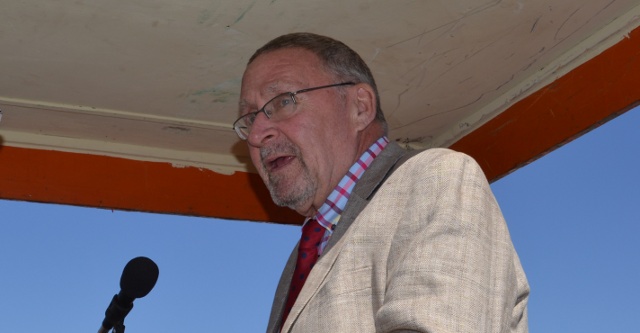
Muscat in meeting with angry fishermen

Joseph Muscat this afternoon heard fishermen complain about the "storm" they had to endure over the past few years at the hands of "an arrogant" administration.

In a hall packed with Marsaxlokk fishermen, Dr Muscat said a Labour government will have a minister solely responsible for fisheries and agriculture.

But the Labour leader made it clear that fisheries was heavily regulated by the EU and any government will have to manouvre within constraints.

The meeting was held at Pompei Hall in Marsaxlokk and the media were only allowed in for the introductory speeches. A Labour spokesman said it was the fishermen who requested to have the question and answer session behind closed doors.

In his introductory speech Dr Muscat said that within EU constraints, a Labour government will ensure fishermen benefit from all the advantages. "If there are EU funds to spend we will use them to help you expand not remove your boats," he said, to applause.

Dr Muscat said it was a mistake to have agriculture and fisheries merged into a massive ministry because this reduced the political focus.

A new government will have a politician responsible only for agriculture and fisheries. He also promised more consultation and pledged to set up a consultative board on fisheries that will meet at least once a month. In this way, the minister will regularly meet fishery sector representatives, he added.

Dr Muscat said that in principle, a Labour government agreed that EU-imposed closed seasons should be accompanied by compensation.

Ray Bugeja from the Koperattiva Nazzjonalisti tas-Sajd said he had little good news to share because fishermen were facing their biggest storm yet. "It is not a storm caused by the weather because we are used to those and we know that sunshine will return. It is a storm imposed by those who were supposed to have been managing this sector."

In a short introductory speech Mr Bugeja said there was lack of dialogue at government level, which he described as "organized disorganization".

Because of mismanagement, he added, the government risked losing Malta's 25 mile fisheries management zone. "There is too much political arrogance," Mr Bugeja complained.

Similar concerns were raised by Joe Demicoli from the Ghaqda Koperattiva tas-Sajd, who asked for Labour's plans on dealing with EU.
Original Article HEre

Saturday, 26 January 2013

PL will strengthen Gozitan agriculture - Joseph Muscat

A new Government will strengthen the agricultural and tourism industry in Gozo through incentives, Labour Party leader Joseph Muscat announced this afternoon at the Agriculture Cooperative Gozitano Centre in Xewkija, Gozo.

He argued that the government must invest in farmers, giving them the ability to not only produce raw products, but process them as well. He spoke of the producers who process local products, explaining that they do not qualify for agricultural incentives or business schemes. “This needs to be amended and a clear policy for this sector must be addressed,” he added.

He proposed the creation of a Special Market Policy Programme for Maltese Agriculture with the EU, which can help the industry. The Opposition leader described the potential he sees in the agro-tourism sector, which must be developed.

Manager of the Cooperative Joseph Grech said there are around 500 farmers in Gozo and explained that this Cooperative allows them to pool together to sell their products.

Original Article Here

Friday, 25 January 2013

Senators press for EU trade talks to address agriculture

[WASHINGTON] FOUR Republican farm state US senators on Thursday expressed concern that possible free trade talks between the United States and European Union may not dismantle longstanding EU barriers to US pork, beef, poultry and other farm products.

"Our trade negotiators must demand of EU officials that barriers to US agricultural products be addressed in any potential trade agreement," the senators said in a letter urging Senate Finance Committee Chairman Max Baucus, a Democrat, to schedule a hearing with US trade officials.

The US and the 27 nations of the EU have been discussing for more than a year the possibility of launching free trade talks and are widely expected in coming weeks or months to make a decision to take that step.

The senators - Chuck Grassley of Iowa, Pat Roberts of Kansas, Mike Enzi of Wyoming and John Thune of South Dakota - said they wanted a hearing because Congress has not passed legislation, known as Trade Promotion Authority, giving the administration specific guidelines for any talks with the EU.

"It is important we know where the discussions with the EU stand, and what exactly has been discussed regarding barriers to agricultural products, so we can determine for ourselves whether the administration is adequately addressing this key trade priority," the senators said.

The US has been frustrated for years by what it considers the EU's "non-scientific" approach to food safety. The EU has blocked imports of US genetically modified corn and soybeans, poultry treated with chlorine dioxide, beef with lactic acid to kill pathogens and pork produced from hogs given ractopamine, which promotes lean meat growth.

US trade officials have said they are looking for progress from the EU on agriculture barriers before talks begin. That is believed to be one of the main reasons that a high-level US-EU working group report on the expected negotiations that was due in December still has not been released. - Reuters
Original Article Here

Monday, 21 January 2013

Global agriculture between hunger and profit

Feeding a growing world population seems impossible without major investment in global agriculture. But a symposium at the Green Week food fair has found that plans to curb hunger often clash with big business.


One of the most prominent participants in the panel discussion was Jürgen Fitschen, who, with Anshu Jain, is one of the two Chief Executives of Germany's Deutsche Bank. For Europe's biggest private bank, agricultural commodities are a growth market.

Fitschen announced at the gathering that the bank's board had decided to resume trading in so-called Exchange Traded Index Funds (ETF) based on agricultural commodities, reversing a ban on food speculation imposed by the bank last year. An internal review had found no apparent link between speculative food-based financial products and fluctuating global food prices, he said.

"Although it cannot be completely ruled out that price volatility is enhanced under certain market conditions, we've found that prices also fluctuate in the absence of this type of financial product," he claimed.

Capital-intensive agriculture

In addition to dealing in financial derivatives trading in foodstuffs, Deutsche Bank, as a global player in financial markets, also offers direct investments in agriculture, food trading and production. Just recently, the bank created a new investment fund worth $135 million (101 million euros) aimed at lending money to farmers in Africa. The fund is supported by Germany's development ministry.

Capital investments in agriculture were a prerequisite for safeguarding food production in future, Fitschen noted, adding, however, that any lending to this sector needed to be based on rational facts rather than guided by emotions.

"This means that investors want to have a decent return on their capital," he said.

However, Fitschen's position was vehemently opposed by Bärbel Diekmann, President of the German non-governmental Agro-Action pressure group, who also participated in the Green Week symposium.


She argued that price spikes in critical situations had contributed to epidemic hunger in various countries, and provided ample reason to become emotional. Big investors would often fail to invest in small-scale agriculture in spite of that fact that millions of people, including many children, remained undernourished, she said.

Investment role model

Investments which expropriated the land of small farmers for the sake of export earnings, Diekmann added, wouldn't advance food production but remained a profit-driven big business. She cited Swiss-based food conglomerate Nestlé as an example of a company which was trying to do things differently. In efforts to double sales of its coffee-based products over the next decade, Nestlé was spending 500 million euros to boost the productivity of its 650,000 local coffee suppliers worldwide.

For Nestlé, business interests and the advancement of small coffee farmers went hand in hand, said Nestlé's board director Peter Brabeck-Letmathe during the discussions. Nestlé had provided farmers with about 220 million new coffee plants, which Brabeck-Letmathe described as an investment in better quality and higher yields, based on using less water.


Nestlé's example is in line with demands made by the United Nation's Food and Agriculture Organization (FAO) for boosting investment in sustainable agriculture in developing countries. FAO estimated that about $83 billion would need to be spent on farming and rural development every year to secure food production for the 9 billion people who are expected to be living on this planet by 2050. Currently the average third-world farmer puts 114 euros a year into improving production. That's not enough and completely leaves out the costs of necessary improvements in infrastructure as well as market development, education and research into better crops.

Mozambiquestands out

The speakers at the meeting agreed that Mozambique was a remarkable example of a country which had made huge strides in agricultural development in recent years after having been dependant on food imports until about ten years ago.

"Today, Mozambique is an exporter of sugar, cotton, cashew nuts, maize and bananas," the country's agriculture minister Jose Condungua Pacheco told the symposium. Land was state-owned, he added, and foreign investors are only allowed to use arable land for a limited period of time. In addition, investors must negotiate contracts for land use with local communities and employ local workers.

"In this private-public partnership the power of local communities is strengthened because investors seeking to use farmland must negotiate with the people living there," Pacheco said.

Deutsche Bank's Jürgen Fitschen was strongly critical of such investment conditions. He said foreign investors must be allowed to hold majority stakes in farms, and that crops must be allowed to be sold on global markets if agriculture was really to move forward.

Original Article Here


Saturday, 19 January 2013

New agriculture laws will now end colonial-style farming

BY STAR REPORTER
President Kibaki’s assent to three key agricultural bills sets the stage for the most far-reaching changes in the sector since independence.

By consenting to The Agriculture, Livestock, Fisheries and Food Authority Bill 2012, The Kenya Agricultural and Livestock Research Bill 2012, and the Crops Bill 2012, he now sets the stage for the consolidation of functions of a number of allied ministries, the scrapping or merging of non-core state corporations and the commercialisation of profit-making ones.

His signature has unified the 131 laws that have governed the sector and essentially removed from the law books the ubiquitous Agriculture Act, an 80-year old piece of legislation long blamed for the dismal performance of agriculture. The colonial regime created the statute to promote European farming at the expense of indigeneous Kenyans.

The new laws, passed by Parliament during its final sittings, seek to transform farming into a professional, well-paying, internationally competitive and attractive to the youth. The agricultural sector is to drive Vision 2030.

Depending on the preference of the next Government in setting its Cabinet, the ten allied ministries can now be collapsed into one or two, as envisaged in the initial drafts by the Agricultural Sector Coordination Unit , a multi-ministerial agency that has overseen reforms in the sector.

The ten subsectors are: Agriculture; Livestock; Land; Fisheries Development; Environment and Mineral Resources; Water Resources and Irrigation; Regional Development Authorities; Cooperative Development; Forest and Wildlife; and Development of Northern Kenya and Other Arid Areas.

Among parastatals facing the axe is the 63-year old Cereals and Sugar Finance Corporation. It is in debts, and its operation has often been questioned by Parliament. In fact, its liquidation has been inexplicably pending for over ten years.

Others are Sisal Board, Cotton Board, National cereals and Produce board, Coffee Board, Tea Board, Kenya Sugar Board, Pyrethrum Board, and Coconut Development Authority, Kenya Plant Plant Health Inspectorate Service, and Horticultural Crops Development Authority.

Their functions will be taken over by a new powerful body, the Agriculture, Livestock and Food Authority. The Dairy Board, Kenya Meat Commission, Pig Industry Board, Pests Control Board, Kenya National Artificial Insemination Centre, will collapse into a Livestock Authority.

The Kenya Agricultural Research Institute will merge with other research institutions, including Kenya Triponomias Research Institute, Kenya Forestry Research Institute , Coffee Research Foundation, Tea Research Foundation, Kenya Sugar Research Foundation to form The Kenya Agricultural Research Organisation.

The agricultural sector comprises over 60 parastatals. Already, reforms implemented in the last ten years have seen about 20 parastatals scrapped. “Some of the parastatals reproduce the work of others,” says Dr Sally Kosgei, Minister for Agriculture.

Take the example of the Cereals and Sugar Finance Corporation; established by Parliament to raise money to lend to Government agencies for the purchase and production of grains and cereals. It is still in business despite the fact that the Government declared it insolvent about ten years ago.

“The corporation is dormant and technically insolvent,” said the Auditor General’s report 2008/9. As early as 1976, Parliament had singled it out among the corrupt parastatals.

According to the new laws, profit-making parastatals will run as companies. “Every (parastatal) that carried out any commercial activity with the objective of making profit have twelve months to transform into a company and be registered as a company under the Companies Act so as to enable (it) carry on commercial activity.”

The new law s discount any fears about job losses. “Any person who, at the commencement of this Act, is a member of staff of a former institution shall, on the appointed day, become a member of staff of ALFA on the same or improved terms and conditions of service as may be specified by the Cabinet Secretary”, the Act states.

Original Article Here

Friday, 11 January 2013

Ukraine Increases Agricultural Export

UKRAINE - In 2012, Ukrainian agricultural export increased by nearly 40 per cent, reaching USD 17 billion, according to the Ukrainian Minister of Agrarian Policy and Food Mykola Prysyazhnyuk.

Additionally, he noted that Ukrainian agricultural industry produces twice as much as is consumed by the domestic market. Comparably, the UK produces only 60 per cent of the food consumed in the country. 

Ukrainian agricultural export in January - October 2012 included meat, fish, dairy, poultry, vegetables, vegetable oils, sugar, wine, nuts, apples, as well as 6.7 million tons of wheat worth nearly USD 1.8 billion, according to ukrstat.gov.ua. Major buyers of Ukrainian agricultural products in 2012 were the EU and CIS countries. 

In late December 2012, the Financial Times noted Ukraine's potential in wheat, barley, corn, and sunflower seeds export. Notably, in 2011, Ukraine joined the world's top three grain exporters. A year prior - in 2010 - it landed fourth on the list of the leading grain exporters, following the USA, the EU, and Canada. Moreover, Ukraine currently ranks number one in global barley exports. 

Additionally, the Eastern European country became the third largest corn supplier in the world in 2011, surpassing Brazil and being the second runner-up to the USA and Argentina. In 2012, China - the world's largest corn consumer - imported Ukrainian corn for the first time. 

Suffice it to say that in 2011, Ukraine became the world's largest sunflower exporter, according to Erste Bank. The top consumer of Ukrainian sunflower oil is India - the country acquires around one quarter of the annual Ukrainian sunflower oil export, according toUkragroconsult. 

Given Ukraine's rich grain production in 2011, the country initiated the creation of the world's grain reserve under the auspices of the United Nations to ensure more efficient price regulation on the world grain market. Ukraine aimed to form a grain reserve of 10 to 12 million tons and use it for grain interventions.

ThePoultrySite News Desk

Saturday, 15 December 2012

Most Pork is Contaminated, New Study Shows

By: Melissa Breyer

A Consumer Reports analysis of pork purchased in American supermarkets and other shops reveals that many samples contained surprisingly high amounts of a bacterium that causes food poisoning. Compounding the concern is that many of the samples of the bacterium, Yersinia enterocolitica, proved to be antibiotic-resistant.

The magazine analyzed 148 samples of pork chops and 50 samples of ground pork for contamination, the meat was selected from a variety of stores in six American cities -- the stores from where the samples were purchased were not named.

Y. enterocolitica was found in 69 percent of the samples. Salmonella,staphylococcus aureus, or listeria monocytogenes, which are all more-common causes of foodborne illness, were found in 3 to 7 percent of samples. And 11 percent of the samples had enterococcus, which suggest fecal contamination and may cause illnesses such as urinary-tract infections.

Although salmonella and E. coli usually steal the spotlight, Y. enterocoliticasickens about 100,000 Americans a year, commonly children.

According to the CDC, common symptoms in children infected with Y. enterocolitica include "fever, abdominal pain, and diarrhea, which is often bloody. Symptoms typically develop 4 to 7 days after exposure and may last 1 to 3 weeks or longer. In older children and adults, right-sided abdominal pain and fever may be the predominant symptoms, and may be confused with appendicitis. In a small proportion of cases, complications such as skin rash, joint pains, or spread of bacteria to the bloodstream can occur."

The magazine notes their concern that the majority of the samples it analyzed were resistant to at least one of the medically prescribed antibiotics they used for testing in the lab. Many factory-farm raised animals are commonly fed antibiotics to keep them 'healthy' -- the practice is widely criticized because of the horror-movie potential for resistant strains of bacteria to dominate, and sure enough ... according to the report:


Some of the bacteria we found in 198 samples proved to be resistant to antibiotics commonly used to treat people. The frequent use of low-dose antibiotics in pork farming may be accelerating the growth of drug-resistant “superbugs” that threaten human health.


Also of note, about 20 percent of the 240 pork products analyzed also tested positive for the growth-hormone drug ractopamine. Originally developed as an asthma medication for humans, it was never approved for that use, but was later employed to increase pigs’ growth and lean muscle mass. (God forbid Eli Lilly should let a drug go to waste.) It’s a controversial drug, and is banned in the European Union, China, and Taiwan -- Consumer Reports' food-safety experts posit that no drugs should be used in healthy animals to promote growth.

There are steps consumers can take to avoid Y. enterocolitica in pork. Most importantly, make sure that the pork is cooked to 145 degrees for whole pieces of meat and 160 degrees for ground pork. But the best way to ensure avoiding illness from industrially-raised meat? Avoid it all together.
Original Article Here

Tuesday, 27 November 2012

Dry cold weather affects agriculture and horticulture in Kullu region

Intense dry cold conditions and lack of rainfall in Himachal Pradesh has taken a toll on the Rabi Crop as well as on apples and other fruits.

Dharambir Dhami, an agriculture expert, said: "The weather is cold and dry. It's so dry that children are falling sick and same is the case with old people. It's really difficult. Also, the farmers are suffering. Agriculture and horticulture have taken a severe hit. Apple production has also been adversely affected and farmers incurred heavy loss. Agriculture is in a bad shape, the last season was bad and even this year there is little hope, as farmers have not been able to cultivate wheat as yet."

Dhami also said that apple production would particularly be affected in the low-lying regions of the state.

The dry weather has also affected the production of other crops such as wheat as the growth of the crop is dependent on a good amount of rainfall

Although not cold by the standards of Europe and North America, the drop in temperature can have a devastating effect on the hundreds of thousands of homeless people in India. (ANI)
Original Article Here

Saturday, 24 November 2012

Agriculture spending

By Dave Keating 

One of the most important aspects of the budget talks will be what happens to agriculture funding. In the latest compromise draft, put forward by European Council President Herman van Rompuy, funding for agriculture would be cut by €14.5 billion, a 6% cut from the European Commission's proposal. Farmers warn that this could have a devastating effect on European agriculture.

This afternoon, farmers organisation Copa-Cogeca outlined what it believes is at stake. “Agriculture spending, which is less than 1% of EU expenditure, has been falling continuously for many years while other countries like the US, China and Brazil are investing strongly in their agricultural sector to maintain competitiveness,” said the organisation's Christian Pees.

“The [Van Rompuy] draft would be a further cut in agriculture expenditure, on top of the EU Commission proposals which already reduce the CAP budget by 10% in real terms.” The compromise, he said, would mean a cut of 17% in real terms.

But the CAP has some strong defenders among the member states. France is expected to oppose any major cuts to the agricultural budget. The Commission has also stood by its original proposal for CAP reduction. Dacian Ciolos, the European commissioner for agriculture, has criticised the Van Rompuy proposal, saying that it “goes against our efforts to make CAP fairer, greener and more efficient”.

European Commission President José Manual Barroso said yesterday: “Europe needs a strong, up-to-date, competitive, innovative and green CAP more than ever, to meet the European public's demands for food supplies and a healthy lifestyle, but also to help combat climate change and contribute to the sustainable management of our natural resources,” he said. “Have we really thought about what would happen if there were no common agriculture policy - if we had market fragmentation in Europe as a result of 27 different national agricultural policies?”
Green concerns

Environmental campaigners fear the cuts proposed by Van Rompuy would derail efforts to 'green the CAP' during 2014-20. The CAP is divided into two pillars – the first containing only direct payments to farmers, and the second pillar based on rural development, which contains payments because of environmental and land-stewardship measures.

The cuts proposed by Van Rompuy hit the second pillar hardest. His plan would see cuts in direct payments to farmers of 5.8% but it would cut rural development funds by 9.3%, even though that first pillar is three times as large as the second pillar.

Environmental groups fear the new CAP could be even less green that the existing one. They fear that member states will discard the greening measures that the Commission has tried to insert into the first pillar because of the budget cuts, and what environment measures are left in the second pillar will be underfunded.

“If agriculture ministers understand that the overall CAP money is decreased, they will fight even more strongly against greening measures,” said Marco Contiero of Greenpeace.

But those who have traditionally complained about the cost of the CAP are eager to trim the programme down.
Original Article Here

Farming bodies disappointed

Farm groups expressed disappointment at the suspension of the EU talks but said it was better to end the talks than to agree measures that would have negative implications for the State’s agricultural industry.

Minister for Agriculture Simon Coveney said his focus would be on securing the best possible deal for Ireland when the negotiations resumed.

He said Taoiseach Enda Kenny and other government leaders had worked hard on Thursday night to defend the Common Agricultural Policy (Cap) budget and this had resulted in an €8 billion increase in agriculture funds. “Ireland will continue to maintain a strong defence of the Cap budget during our [EU] presidency next year,” he said.

Irish Farmers’ Association president John Bryan said farmers were disappointed that agreement was not reached at the heads of government meeting but “no deal is better than a bad deal”. He called on Mr Kenny to maintain the pressure in the ongoing negotiations.

Irish Cattle and Sheep Farmers’ Association president Gabriel Gilmartin said the talks breakdown was “a significant setback” to achieving the right Cap deal.
Original Article Here

Tuesday, 25 September 2012

Scott says agricultural sector has been static in 50 years

Vice President Guy Scott has observed that the agricultural sector in Zambia has remained unchanged for the past 50 years.

Dr Scott says agricultural sector has not moved due to the land tenure system which is customary as well as state and hoped that the Commonwealth Agricultural Conference currently taking place in Zambia will greatly benefit the sector.

The Vice President said this at the 25th Commonwealth Agriculture Conference being held in Livingstone under the theme is “Africa’s role in world food production”.

At the same occasion, Her Royal Highness Princess Anne of the United Kingdom, who is in the country, said that needs to improve food and energy by 50 per cent and provision of fresh water by up to 30 per cent by the year 2030.

Princess Anne said she is encouraged by the number of young people who are engaged in agricultural activities and hoped that they will be embedded in agriculture in order to allow the transfer of knowledge.

The Princess said Zambia has potential to develop in both the agricultural and tourism industries due to its rich soils and wildlife.

The Princess has since thanked the Zambian government and the Agricultural and Commercial Society of Zambia for its contribution to the agricultural sector.

The conference has representatives from 14 countries which include Australia, Botswana, Canada, England, Kenya, New Zealand, Papua Guinea, and Scotland. Others are United States of America, Zambia and Zimbabwe.

ZANIS
Original Article Here

Friday, 21 September 2012

FAO - Food and Agriculture Organization of the Uni : Putting Swaziland's smallholders first

You cannot tackle rural poverty, if you don't put the smallholder farmers first11 September 2012, Mbabane, Rome - Rural farmers in Swaziland are starting to reap the fruits of a comprehensive effort by the government and FAO with support of the EU to reverse the country's declining agricultural productivity.

Consecutive years of drought, a crushing aids pandemic, decades of economic slowdown and more recent soaring prices of food and agricultural inputs: it has become increasingly hard to make a living for Swaziland's cash-strapped rural population, highly dependent on subsistence farming.

According to FAO's most recent hunger figures, almost 20 percent of the country's one million people is undernourished.

Since 2009, the EU has been supporting a wide-ranging initiative of the government and FAO to raise nutrition levels of the rural population and stimulate their economic growth potential, known as the Swaziland Agricultural Development Project (SADP), a 5-years programme funded with over €14 million of EU and almost €350 000 by FAO.

Although it was challenging to get such a complex project off the ground, Amadou Traoré, the EU's chargé d'affaires a.i. in Swaziland feels that things are moving in the right direction. "European taxpayers are willing to show their generosity," he says, "but especially now, when Europe itself experiences financial and economic difficulties, they want to see results." 

Louise McDonald, country program manager for the International Fund for Agricultural Development (IFAD) for Swaziland, says that SADP's achievements have strengthened collaboration between IFAD and FAO in assisting the government and smallholder farmers. "Together, we will work on bridging SADP's activities with a US$ 47 million program to be co-financed by IFAD", she says.

Smallholders

Fundamentally, SADP is all about smallholders, says Nehru Essomba, the project's Chief Technical Advisor: "You cannot tackle rural poverty, if you don't put the smallholder farmers first."


Connecting farmers to the market is a major challenge, Essomba says. So close to South Africa with its big scale producers, the environment is extremely competitive. SADP is setting up a €1 million Marketing Investing Fund, particularly to promote niche crops that offer small farmers a comparative advantage on the market place.

Equally important is to improve the environment in which the agricultural sector operates, both institutionally and physically. While major infrastructural rehabilitation works are being prepared, policies relating to research and extension are being updated and large scale capacity building of farmers, organisations and extension workers is underway.

At the same time, SADP helps spreading good agricultural practices, important for farmers to increase their productivity, while preserving the environment and lessen the pressure on Swaziland's limited natural resources. So far, more than 2 000 farmers have been trained in a wide range of practices, including conservation agriculture and agro-forestry.

Holding on

"Food security will come in two ways: by growing your own food and by growing to sell at the market," says Dr. Robert Thwala, Principal Secretary of Swaziland's Ministry of Agriculture, explaining SADP's focus on improving crop and livestock production and on agro-business development.

In Swaziland, where HIV prevalence is the highest in the world, the most vulnerable among the rural poor are the elderly and the youth, who have lost either parents or children, as the generation in between was decimated by the aids pandemic.

A total of 340 vegetable gardens have been established for vulnerable families to grow vegetables and herbs for household consumption, or in case of excess production, for sales to community members. Over 2000 people have directly benefited from the gardens, while also receiving nutritional education, through demonstrations in food preparation and processing. 

To support the younger generation, SADP is helping youth groups set up small agricultural businesses. Sixty groups, comprising around 2 500 youngsters, are engaged in poultry farming, pig production or vegetable and field crop production. They get the equipment, tools, inputs, medicines and training to make their business run.

The Mhawu Youth Club from the Ngudzine area in southern Swaziland is raising chickens. Sixteen year old member Nomcebo Simelane finds a lot of encouragement at her club: "Your peers tell you that when you want to make your dreams come true, you should just hold on."

Moreover, the poultry business offers her a way to do just that. She hopes that she will make enough money out of it to go to university and become a nurse.
Original Article Here

Agriculture: Food produce speculation remains niche area

By Lucy Warwick-Ching
Crop speculation by traders is back in the spotlight after food prices rose by an average of 6 per cent globally in July and critics argue speculation heaps further pressure on the world’s poorest people.

A number of European banks have bowed to pressure and have withdrawn products that enable investors to speculate on food prices after campaigners said these investment vehicles play a significant role in pushing up prices globally.
The recent rises in agricultural commodity prices have raised concerns about supply shocks, as well as the effect on food inflation around the world over the next 12 months.

“The worst drought since 1956 in the US has sent corn yields plunging and price soaring which has forced farmers across the US to make the choice between feeding their livestock at elevated prices, and slaughtering them, as they become too expensive to keep,” says Michael Hewson, senior market strategist at CMC Markets.

“While this has sent beef prices lower, the rise in prices has also illustrated how sensitive the food chain is around the world to even the slightest supply shock.“

There are still ways for small traders to speculate on crop prices without buying the assets directly – via spread bets. Spread betting firms routinely offer prices on a range of the leading agricultural commodities, including wheat, corn, sugar, coffee, cocoa, oats and soya produce. You can either spread bet on the commodity itself, or, in some cases, on the exchange-traded product linked to it.

But it is still a niche area for investors. “Soft commodities have never been a major market for Capital Spreads’ clients,” says Simon Denham, head of the firm. “While clients do tend to like ‘volatile’ instruments, the information flow is so opaque, and the consequent price action so violent, that investors have been rather put off.”

Mr Denham adds that in the past investors have generally needed a reason to be involved – for example, if they are a producer, supplier or broker – and have tended to “need deep pockets and nerves of steel”.

Agricultural commodities tend to cost more to spread bet, than, say, equities, warn experts. To trade corn, the difference between bid and offer prices could be several times that on the FTSE 100. And the spread for something less mainstream, such as oat prices, would be even wider.

But experts say shot-term traders can benefit from the continuing price fluctuations.

“Agricultural commodity products are likely to have wild swings as they become politicised coming into the November US elections,” says Joe Rundle, head of trading at ETX Capital.

“The increased headlines will draw in a new breed of speculator who has not traditionally traded agricultural products – ETX has seen a 200 per cent increase in trading in December wheat prices. The speculators will add to the volatility in the short term as they chase the market.”

So, what has been driving prices? Part of the problem surrounding food price volatility, says Mr Hewson, and something that will continue to be so, has in part been the scarcity of available arable land. When set against rising food needs, this is likely to make future price shocks “a fact of life,” he warns.

He argues that this will be compounded by the rise of a growing middle class in emerging market economies. “The growth in countries such as Brazil, India and China will probably see demand for these food staples rise in the coming years and governments will have to make hard decisions about how they meet the needs of their populations in a world that appears to be growing rapidly, while susceptible to ever-growing extreme weather conditions,” he notes.

Predictions vary widely among experts as to which way food prices will go. For those traders still keen to take a punt the question is, which way to bet.

Matt Weller, technical analyst at GFT Markets, says that with a growing global middle class and continuing demand from agricultural crops being used as biofuels, “the long-term trajectory for soft commodities appears set to remain upward”.

But he says much of these rises are linked to institutional speculators putting pressure on prices to rise. “As such, although it may to too early to call a top to this rally, it would seem foolish to imagine that the gains can be guaranteed from this point in,” he adds.

“In fact, long-term seasonality patterns suggest that many soft commodities tend to drop over the September and October period as the supply glut around harvest time hits the market.”

However, Mr Denham argues that the temporary run up in prices dues to the possible failure of this year’s US harvests will probably not have a long-term impact on prices because, in the end, the segments with the power in the food price chain “are the processors and supermarkets, not the farmers”.
Original Article Here

Tuesday, 18 September 2012

Agriculture : Romania has for the first time exported organic maize to America

Romania could become an important supplier of organic raw materials for animal fodder to the United States of America, given that it has for the first time this year exported organic maize to America, Chairman of the Bio-Romania Association of Organic Farm Operators Marian Cioceanu told Agerpres on Sunday.
'Romania has recorded a big success as a result of its last year's participation in Biofach Baltimore, one of the largest organic farm conventions in the US. Although exports were no more than just some containers, I think it is marvellous for a European country to have exported maize to the motherland of maize, the US, this proving the huge potential of the Romanian agriculture to produce under an organic system. The first cargo arrived there two months ago and more maize will leave for the US market from the current crops,' said Cioceanu.

He added that no matter how much genetically modified wheat and maize Romania grows, the local farmers will be unable to enter the American markets with products cheaper than those made in Argentina or Brazil.

This year, Romania is taking part for the second time in Biofach America, one of the largest organic agricultural conventions in America to be held September 20-23 in Baltimore. There will be 11 Romanian companies displaying in the convention this year, compared with seven in 2011.

Showcased at the Romanian pavilion will be organic products including cereals (wheat, maize, barley, soybean), vegetables, oilseed plants, honey, bee products, wild berries, organic bread and bakery products, some of them kosher certified, organic wines and grapes as well as organic cosmetics.
Original Article Here

Sunday, 9 September 2012

Sowing the seeds of profitable agriculture in Romania

The development of sustainable and profitable agriculture in Romania, problems with genetically modified organism (GMO) regulations in Europe and controversies over GM crops, the trade dynamics of agricultural products in Romania over the last decade and EU policies and their impact on Romania are among the most significant problems local agriculture is facing, say industry players. And these topics were duly raised and debated at the event. Currently, Romanian agriculture must undergo many changes to reach European Union levels. Although the country has no irrigation system, little storage space, a productivity level that is half the EU average, and just a fraction of European funds have been absorbed, market players are trying to see the light at the end of the tunnel. 

Achim Irimescu, secretary of state, Ministry of Agriculture and Rural Development 
"Sustainable agriculture is a very new concept but highlighted in the last decade. The Common Agricultural Policy (CAP) has focused on sustainable agriculture. As long as the farms respect EU rules, we can talk about sustainable agriculture at a local level. Large producers should be able to meet high standards. I believe that sustainable agriculture is the basis for future agricultural development." 
"The goal is to transform the European farmer into a rural entrepreneur. Romanians can align to European requirements. Also, one solution would be agronomic research to come up with revolutionary solutions to produce more with fewer resources." 

Veronica Toncea, general director, the Guarantee Fund for Rural Credit 
"Among Romanian agriculture’s advantages are that it is the only sector that has something like the Common Agricultural Policy, which means a common market, common rules and standards and a common budget, European funding sources and substantial national budgets, which are used to support agricultural production and environmental development areas." 
"Another advantage is the partnership with the banking system, given that all the sums will be distributed to beneficiaries through bank accounts." 
"The objectives of the Guarantee Fund include supporting food security and increasing the export of value-added agricultural products, in the context in which global demand is greater than the supply of such products, and some EU countries have reached their peak of productivity, plus the efficient use of natural resources and social cohesion in rural areas." 

Maria Cirja, marketing manager for Romania & Moldova at Pioneer 
"The European and Romanian farmer has to develop into an entrepreneur, and act according to business principles, if we want to develop profitable agriculture." 
"Production must grow continuously to cope with population growth, the consumption of fuel and increasing meat market demands. If the production cannot cope, marginal non-agricultural areas will be forced to become agricultural. Production must increase by 70 percent by 2050 to feed over 9 billion people." 
"We can develop through research and innovation. Sustainable agriculture is profitable long-term agriculture. Production on acreage obtained from Pioneer corn hybrids can provide animals with enough food to meet the annual average consumption of beef (2 billion people), pork (1.8 billion people) and chicken (1.4 billion people)." 

Klaus Amman, Bern University, Switzerland 
"I think we should change our focus from process to product. We should look at products because the processes change anyway. In Romania I love that farmers can talk to scientists. We are making progress and GMOs will develop in the future." 

Financing for farms 

Due to its weather conditions and higher than the average European arable area, Romania has excellent primary agricultural resources, but to achieve performance like farms in other European countries it needs major investments in upgrading and modernization, argue players. Compared with other EU members, Romania’s agricultural system is poorly financed, has major differences in unit production, a weak organization of capitalization and must fight farmers’ reluctance to join a cooperative. The Romanian agricultural sector has a high capacity to absorb new funds and to develop further and longer than any other field. The support of the European Union through grants is an advantage for those who wish to invest, without having a significant financial contribution of their own to make. The majority of financing in agriculture is done through banks, whether it takes the form of a grant, EU funds or a loan. 
In 2011, considered one of the best agricultural years since the revolution, agriculture contributed 11.3 percent to GDP growth, compared to previous years when the average contribution was 6-7 percent, and both high yields and good prices gave relief to Romanian farmers. 

Achim Irimescu, state secretary at the Ministry of Agriculture and Rural Development of Romania 
"Romania will benefit from EUR 13 billion for agriculture over 2007-2013, of which just EUR 6 billion has been accessed so far. Time is short and an acceleration of absorption is required. We have a partnership with the Guarantee Fund and the banks." 
"In Romania there are two main problems for agriculture: financing and bureaucracy. Clearly, investments in agriculture are very important and direct payments will continue to support farmers’ income." 
"It is difficult to achieve a balance between Pillar 1 and Pillar II. Romania needs both and we have supported this. For objective reasons Romania is among the countries with low direct payments. EUR 8 billion was allocated to Pillar II and EUR 5 billion to Pillar I. As long as the overall amount remains constant, GDP will not be affected. If it changes it will affect Pillar II." 

Veronica Toncea, general director, Guarantee Fund for Rural Credit 
"There is less interest in financial solutions for farmers than in 2011. Our recommendation for farmers is to take out credit in the national currency as they have revenues in RON. The maximum guarantee ceiling is 80 percent, while the maximum value of a guaranteed fund is EUR 2.5 million. There is open competition between banks to give credit for this sector. It is important to emphasize that individuals cannot obtain financing for agricultural projects unless they are authorized individuals (PFA), family associations, enterprises or other small companies. In terms of procedure, nothing has changed since 2011." 
"Current legislation allows the reduction of agricultural risk by having secured guarantees for both short-term and long-term loans. Financing agriculture and projects using European funds are among the main strategies of commercial banks (with an increase of about 10 percent in 2011). The volume of loans to companies has higher growth rates than to individuals and financing costs have dropped compared to previous years." 
"Commercial banks compete in agricultural lending and in creating new loan products adapted to agriculture, given that prices are still in line with the 2011 trend. Commercial banks have set up offices and hired staff dedicated to funding European projects." 
"The introduction of a letter of comfort has ensured that the project value takes account of the financial capacity of beneficiaries, which has reduced the risk of projects not being implemented. In terms of guarantees required by commercial banks there have been no significant changes in the percentage of coverage of guarantees of credit exposure, but due to the depreciation value of assets as collateral securities, their value is not the same." 

Dan Florian Petre, agriculture market officer, BRD-Groupe Societe Generale 
"We represent a bank that signed the first partnership with APIA in 2008, targeting financial products for agriculture. We have delivered in recent years, and we continue to deliver, financial products for farmers, to meet their need. I know that the general feeling is that banks are closely competing by launching different products in this segment, but actually their claim is limited to the safest level of financing, that of pre-financing subsidies or European funds." 
"Farmers should take note of a product that can be used all along the process and that covers their needs. For instance, we have a financial product with a maturity of 10 years and a grace period of 9 months, in order to cover the seasons of the agriculture cycle." 

Weeding out the biggest problems 

Technical challenges, lack of proper subsidies, tax evasion, lack of state help and the fragmentation of agricultural land are among the main problems dogging Romanian agriculture. Currently, of the 10 million hectares of Romanian arable land only 600,000 hectares are irrigated and the amount of fertilizer per hectare in Romania is 6-10 times lower than in the EU. In addition, there is a lack of storage space around the country. 

Laurentiu Baciu, president of the Romanian Agriculture Producers’ League (LAPAR) 
"We are currently facing the largest disaster in the last 50 years in Romanian agriculture, with production equaling the same vales as 50 years ago. Some of the causes that I can indentify are the lack of irrigation, lack of proper subsidies, tax evasion, inaction from state authorities and ministries when it comes to finding basic solutions for farmers and the fragmentation of agricultural land." 
"Currently 54 percent of Romania’s agricultural surfaces are holdings of up to 1.7 ha. The added value is obtained from the 46 percent which are productive in agriculture. We have the lowest subsidies in Europe and expect others to decide for us." 

Gheorghe Sin, professor and president of the ASAS (the Academy of Agricultural and Forestry Sciences) 
"Given the context of several crises - financial, economic, environmental and food - plain solutions are needed from politicians. Even if agriculture has been invoked many times in rhetorical speeches, it seems that, in fact, it hasn’t attracted too much attention from the political sphere." 
"The local potential of this segment, which could feed a population two or three times the size of Romania’s, is not being used and we should analyze several aspects: the lack of efficiency of subsidies, the banks which are not acting according to partnership principles and ineffective lobbying by those in favor of GMOs." 

Dorel Benu, president of the Romanian Payment and Intervention Agency in Agriculture (APIA) 
"Our most urgent need is to find a more coherent and organized system for our dialog partners. Currently, we are in discussions, individually, with over 1 million farmers. Another downside of our work process is the lack of the cadastre for agriculture land." 
"Also, farmers are complaining that the diesel subsidy is too small." 

Veronica Toncea, general director, Guarantee Fund for Rural Credit: 
"Currently agriculture vulnerabilities include the excessive division of land plots, which has caused a high percentage of self-consumption, and the elderly farming population due to young people emigrating. In Romania farmers between 50 and 70 years old own over 2.3 million ha, meaning 24.3 percent of the total agricultural area." 
"Low profitability has caused the decapitalization of the sector and was the main factor in the stagnation of agricultural production." 
"Other problems are the lack of a land cadastre, the underdeveloped agricultural production marketing chain, lack of irrigation facilities, lack of state support for energy and water and tax evasion caused by the dual tax system (individual farmers, VAT excluded, corporate-VAT included)." 
"Another problem is the nonexistent marketing structure to integrate farmers, processors and traders in strategic alliances, with effects on produce (the diversity of producers has raised issues in providing the appropriate volume of standardized products to market requirements)." 

The future of agriculture: GMO and biotechnology? 

One of the most contention topics regarding agricultural development in Romania, and, to a wider degree, in Europe, is the cultivating of genetically modified organisms (GMO) and how this could boost the growth of this strategic industry. This year’s Romanian Agribusiness Forum, organized by The Diplomat - Bucharest in partnership with some of the most significant and biggest companies, financial institutions, state authorities decision-makers and scientists operating in this field, tried to identify the pros and cons of genetically modified crops and address the most troubling aspects of this sector. 

Achim Irimescu, state secretary at the Ministry of Agriculture and Rural Development 
"At European level, we sense that there is no interest in cultivating genetically modified crops. Romania is among the few countries in Europe that appears to be open to this segment. I suggest we let the scientists confirm whether or not it is safe to cultivate GMOs, rather than throw ourselves into emotional debates." 
"On the other hand, Romania imports 45 million tons of soya beans each year and I find it rather weird to fight against cultivating this locally but, in the meantime, import such an amount." 
"I don’t think that the position of the Ministry of Environment will affect the introduction of GMOs." 

Toma Dinu, PhD Professor at the University of Agronomic Sciences and Veterinary Medicine, Bucharest (USAMV Bucuresti) 
"Romania is dependent on agricultural imports. The good thing is that exports have also increased. Mostly, we exports grains, seeds and tobacco, and the numbers of imports and exports dramatically changed for instance in 2000, when GM soya started to be cultivated, and again in 2007, when GM soya was forbidden in local farming." 
"Between 2002 and 2011 Romania exported agricultural products worth a total of USD 20.2 billion. Meat production in Romania is a goal but it is limited to satisfying vegetable protein needs. In 2011 Romania imported feed and soybean cakes worth USD 340 million. Quantities imported exceed 600,000 tons (420,000 tons of soybean cake and 186,000 tons of feed, especially premixed feed). To encourage the production of meat the domestic production of vegetable protein must also be stimulated." 
"In the last decade (2002-2011) in Romania agrifood imports far exceeded exports and the accumulated deficit of the period is USD 16.7 billion of which USD 11.8 billion involved EU member states." 

Doru Pamfil, professor and president of the Commission of Biotechnology of ASAS, rector of the Agricultural University in Cluj-Napoca 
"The present century belongs to biotechnology, as, according to forecasts and scientific studies, 50 percent of the global culture production will be based on biotechnology by 2050. Worldwide food production is also expected to double by that year, in order to be able to feed the estimated global population of 9 billion." 
"Biotechnology, by definition, plans to address the issues of food security and safety issues. Even so, it seems that currently, biotechnologies are better applied in industries, especially in bio fuel, pharmaceuticals and medicine, than the food industry." 
"We should ask a question in the future: whether we want cheaper fuel or food. Currently, European regulations are pushing towards a target of 20 percent bio fuel of the total production. By 2015 more than 50 percent of global production, food, feed and feedstock will be biotechnologically processed, not necessarily GM. It is clear that for the future we must bend more to biotechnology, to establish our priorities."

Friday, 24 August 2012

Europe’s agriculture policy is damaging developing nations


From Dr Nicola Cantore and Ms Sheila Page.
Sir, The common agricultural policy damages developing countries as a group, and the proposed reforms will damage even those previously favoured. As Gail Soutar admits (Letters, August 22), the purpose of the CAP is to “allow European Union farmers to compete globally”. The budget for this remains about €50bn, and the CAP instruments, such as export subsidies and direct payments, are supplemented by still high tariffs.
While the exact impact of each of these measures can be debated, it is frankly inconceivable to suggest that the current €50bn spent on existing European farmers, without asking them to change their behaviour, and with some farmers deriving more than 50 per cent of their incomes from CAP, is, first, money well spent to achieve the valid objectives of the CAP and, second, not affecting trade and production patterns globally. EU agriculture policy directly affects growth and income distribution in and among developing countries.
Moreover, in the current context of increasingly volatile food prices, CAP instruments may exacerbate the negative effects for developing countries. If the CAP is successful in stabilising European markets, this can only mean price fluctuations are transferred to international markets.
Ms Soutar’s argument that “export subsidies amounted to less than 0.5 per cent of the EU agricultural budget in 2010” does not incorporate the recent request by Poland to reconsider the reintroduction of export refunds to dairy products as fast as possible. The argument that “more than 90 per cent of domestic support is decoupled from production and therefore regarded as non-trade-distorting” is questioned by many research studies, which identify distortions from decoupled payments – for example, they lead to an excess of liquidity of farmers in the credit market.
Original Article Here

Thursday, 23 August 2012

Balkans region hit by worst drought in decades


Wildfires are destroying forests, rivers are being reduced to a trickle, crops are wilting on the scorched farmland and electricity supplies are running low.
After the harshest winter in decades, the Balkans region in the southeast of Europe is now facing its hottest summer and the worst drought across the area in nearly 40 years, officials say.
The record-setting average temperatures — which have been steadily rising for years because of global warming, according to scientists — have ravaged crops, vegetables, fruit, and power production in a region that already is badly hit by the global economic crisis.
This year, farmers all over the Balkans are turning to the heavens for help.
"This is lost," Ljubisav Tomic, a Serbian farmer said, pointing to his corn field, yellow and dried out with cracks in the soil. "Only God can help us, only heaven can save us."
In Bosnia, Ajsa Velagic prays to Allah before offering potatoes at the market in Sarajevo, the capital. The 64-year-old said, "There are no large ones, the drought is killing everything."
Adding to the troubles are dozens of wildfires, also fueled by the extreme heat.
Blazes have destroyed hundreds of acres of forests and bush in Bosnia, Serbia, Croatia and Montenegro. Some of the fires raging on the border between Serbia and Kosovo are beyond control because of minefields left over from the war over the former Serbian province in 1999.
Potato crops and corn farms are among the worst hit by the drought as irrigation systems in the former Yugoslavia, built under communism, remain clogged and out of date, leaving most of the farmland at nature's mercy.
The drought in the Balkans is being compared to a similar disaster now under way in the United States, with the economies such as Russia likely to profit by exporting food, wheat and other crops to the Balkan states.
Because of the drought's effect on livestock, analysts forecast a sharp increase in the retail price of meat and milk, adding to the hardship of one of Europe's poorest regions.
"This year's damage from drought is 30-80 percent, in some areas even 100 percent," Tihomir Jakovina, Croatia's Agriculture minister, said during a tour this week of his country's eastern farmlands.
In Serbia, the agriculture ministry said the corn and soya harvest — the country's main export items — will be halved compared to last year, triggering losses of more than $1 billion (€800 million).
In Bosnia, the heat has destroyed almost 70 percent of vegetables and corn, said Sead Jelec, an official at the Association of Agriculture Producers.
"The past six years have been very dry in this region, but this one is definitely the worst, we can say catastrophic," Jelec said. People in the Balkans "should brace for a really bad year."
The region also had a very dry autumn, which emptied the rivers, including the mighty Danube — Europe's biggest waterway. That was good news at first because last winter was extremely snowy and cold in the Balkans, and there were fears of floods once the snow starts melting.
But forestry specialist Dalibor Ballian in Sarajevo said warm southern winds made the snow melt and evaporate quickly. "Therefore, we entered the spring with a deficit of water in the ground," he said. "Now this deficit has hit the record. We will suffer for several years to come."
Again, in less than a year, water levels of the Danube in Serbia and Bulgaria are below those required for safe shipping, officials said.
Bulgarian authorities banned ships with large loads from several stretches of the river. Recently, a cruise ship with 100 tourists hit ground near the Bulgarian town of Svishtov because of the low water level, and the passengers remained stuck in the shallow water until the vessel was towed.
In Romania, exporters of forest fruit — blackberries, blackcurrants and raspberries — in Transylvania have been hit by the dry spell, and small-time farmers have been unable to produce quotas they need to export the fruit to Germany and other Western European countries.
"We used to produce 100 tons. Now it's hard for us to collect 10 tons," said Adrian Parlea, spokesman for the Forestry Department in the Romanian county of Mures, a major region for forest fruit supplies.
The dryness is best seen in small rivers and lakes around the region, with the water levels dropping to only a few centimeters (inches) in some cases.
Hydropower plants in Serbia, Bosnia and Macedonia have scaled down production because of the lack of water, and authorities say electricity will have to be imported as the result.
In Macedonia, officials have warned that even the supply of drinking water could be in jeopardy.
"The level of water in the lakes and rivers is very low, and it is possible that we'll be without drinking water," hydrologist Konstantin Ugrinski told local media. "That is why we call on people to use water extremely rationally, only for drinking and washing."
In Serbia, the Palic Lake in the north has been artificially filled with thousands of gallons of water from a river to save its fish and ecological system.
One of Bosnia's main rivers — Bosna — has turned into a "drainage channel, and entire animal and plant populations have disappeared," said Ballian.
In western Kosovo, the town of Prizren that is a UNESCO heritage site and the home to medieval Serb Orthodox Christian churches and Ottoman mosques, has seen the river Bistrica reduced to a trickle.
Abdyladi Krasniqi said, "In my 73 years, I do not remember the river being so low and the heat being as severe."
Back at the Sarajevo market, Nermina Hasanovic, 52, is selling eggs and a handful of vegetables from the small part of her garden that she has been able to water.
"They are so small and wrinkled. They look like they are already cooked. I'll probably end up feeding them to the cows," she said.
Somehow, as they did during the wars of the 1990s, Bosnians are using dry humor to keep their spirits up.
"We were wondering," Hasanovic said, "if the Americans will be able to grow something on Mars? Meanwhile, we will grow cactus. Can you eat cactus?"
Original Article Here

LinkWithin

Related Posts Plugin for WordPress, Blogger...